- 979-485-9287
- office@bvallergy.com
-
 979-251-7804

How to Manage Allergies When Traveling

Fall Allergy Season in Brazos Valley: Common October Triggers and How to Find Relief
October 13, 2026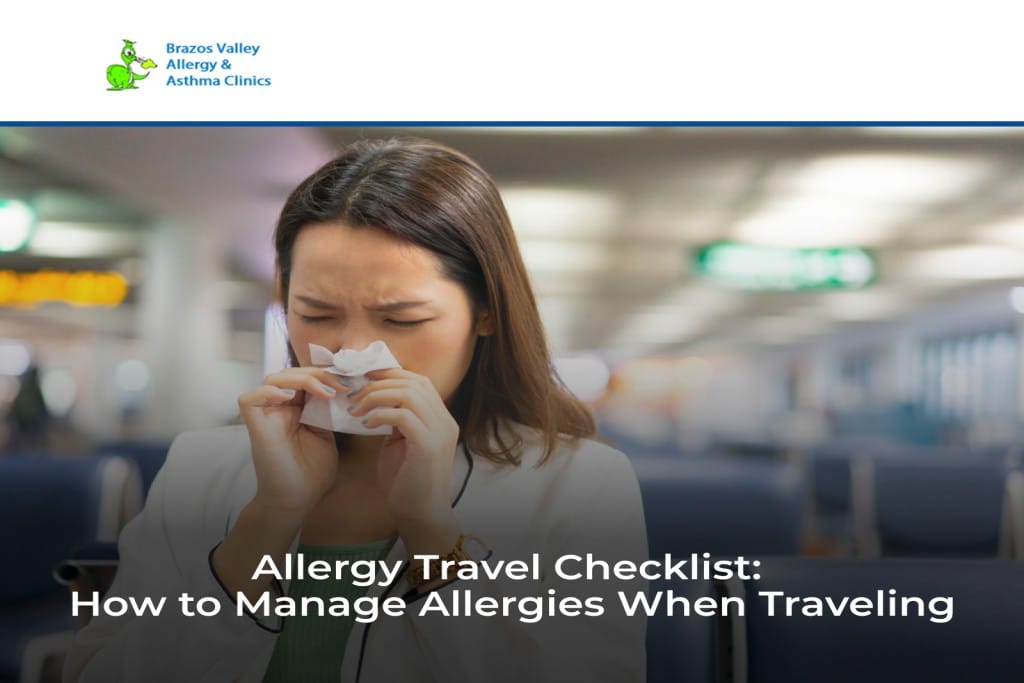
Packing for a trip usually means a list. Passport, charger, shoes, anything you’ll regret not bringing. If you live with allergies, there’s a second list running in the back of your head, and it’s a lot less fun.
What will the pollen count be like there? Does the hotel allow pets? Will anyone at that little seafood place actually understand what “no shellfish” means?
Fair questions. They’re also the ones we help patients answer every week at BV Allergy, long before anyone heads to the airport. Figuring out how to manage allergies away from home isn’t complicated, but it does take some planning. Whether it’s a weekend drive or a long flight, this is what we tell people about traveling with allergies.
Let’s get your plan ready before you go.
Know Your Allergies Before You Travel
Here’s something that surprises people. Plenty of folks who say they’re “allergic to everything outside” have never actually been tested.
It’s hard to plan around a trigger you can’t name. Oak pollen? Cats? The mold in older buildings? Testing sorts that out, usually in one visit, which is why we often suggest allergy testing before the holidays or before any trip you’ve been looking forward to.
Once you know your triggers, check the forecast where you’re going. Not just the weather. Pollen seasons shift a lot by region, and the coast in April is nothing like the hills in November, so it’s always best to check for pollen count.
Allergy Travel Checklist: What to Pack and Prepare

All of that goes in your carry-on. Checked bags can get lost. Some luggage sits on a hot tarmac longer than anyone would like and can affect the effectiveness of the medicine you might be taking. If you take prescription allergy medications, leave them in their original labeled bottles so security doesn’t stop you.
The rest is comfort stuff. Fearing you might encounter dust mites? Bring your own pillowcase. Toss in a few safe snacks and some wipes for tray tables in your bag.
Managing Allergies On the Go (By Car, Plane, or Train)
Road trips are the easiest to control. Keep the windows up on high-pollen days, set the air to recirculate, and swap the cabin filter before you leave if it’s been a while.
Flying takes more prep. Tell the airline about any serious allergy when you book physically. You can also do this when you book online via their support line. Then mention your allergy again at the gate. Ask to board early so you can wipe down your seat and tray, if possible.
Remember! Your meds belong under the seat in front of you, not in the overhead bin where you can’t get to them mid-flight.
Trains and buses land somewhere in between. You can’t pick your neighbors, but you can usually pick a seat away from the doors, where outside air and smoke drift in.
One more thing about allergies while traveling: the room you sleep in matters more than people expect. Ask for a non-smoking, pet-free room when you book. Of all the allergy safety tips out there, it’s the one that pays off every single night of the trip.
Be Careful With Food While Traveling
Food is where things get tricky. You want to try the local dishes, and you should! But a menu won’t tell you what was fried in the same oil or chopped on the same board.
So ask, call, or email ahead if you can even. When you sit down, tell your server plainly what you’re allergic to and how serious it is, then ask how the dish is made, not only what’s in it.
But BV Allergy, what if I’m going abroad? Don’t worry! Just remember to bring a chef card in the local language. And if something still feels off, skip it. That’s what the snacks in your bag are for.
Create an Allergy Emergency Plan
We know… Nobody wants to think about the worst case on vacation, and we get it. Still, an allergy emergency plan takes maybe twenty minutes to put together. It will make you feel safer. It also means the people around you know what to do if you can’t tell them.
When creating your own travel health kit, write your allergies, medicines, and doses on one page, and keep a photo of it on your phone. Show whoever you’re traveling with where your epinephrine is and how it works. Before you land, look up the local emergency number and the closest hospital to where you’re staying.
Then learn the signs. Trouble breathing, a tight throat, swelling in the lips or face, hives spreading fast, feeling faint. Any of those means to use epinephrine and call for help. Don’t wait to see if it passes.
When to See a Doctor
If you’re reading this thinking “my allergies are bad pretty much all the time,” take that as your sign. Symptoms that keep you up at night, come back every season, or make you nervous about leaving town deserve a proper look. Here’s more on when to see an allergist.
Reactions to medicine are another good reason to come in. A rash after a round of antibiotics is easy to shrug off at home. But it becomes a different story three time zones away. It helps to know whether antibiotics can cause allergic reactions for you before you’re stuck at a pharmacy counter abroad.
Remember! Anything that looks like a severe reaction is an emergency, wherever you are.
How BV Allergy Can Help
BV Allergy figures out what’s setting you off, then finds a treatment that fits how you live, and how often you’re out of town.
Some patients want relief that lasts well past one trip. For them, allergen immunotherapy (allergy shots) slowly teaches the immune system to calm down. We get asked, “Do allergy shots work?” all the time, and for many people, the answer is yes.
Travel too much for regular visits? Sublingual allergy drops are taken at home. And if a medicine has ever caused you trouble, our medication allergy treatment helps you sort out what’s safe to take.
Planning a trip soon?

You don’t need to give up the beach trip or the weekend at grandma’s farm. You just need a plan. Remember:
- Know what you react to. Pack the meds where you can reach them.
- Ask about the food.
- Keep that emergency page handy.
Honestly, that’s most of how to manage allergy symptoms away from home. If you’d like someone in your corner while you get ready, that’s what we’re here for. Safe travels.
FAQs
|
| With your triggers. Packing, booking a room, ordering dinner: all of it gets easier once you know what you react to. Never been tested? BV Allergy can help with that. |
|
| Yes. Keep it in your carry-on, in its original box, with your prescription or a doctor’s note close by. |
|
| A translated allergy card does most of the talking for you. Show it to your server, and ask them to show the chef. |
|
| If your symptoms are hard to control, or you’ve had a serious reaction before, yes. We’re always glad to help patients prep. |
|
| It can. Allergy shots and sublingual drops lower your sensitivity over time, so travel feels less like a gamble. Reach out to BV Allergy to talk through your options. |